
A spring backyard makeover does not have to mean new furniture, a full planting plan, or a weekend where every surface gets rebuilt. For hosting, the best upgrade is usually simpler: make the yard feel clean, easy to move through, comfortable after sunset, and ready for food without sending everyone back through the kitchen.
Start With the Hosting Path, Not the Decor
Walk from the back door to the table, then from the table to the grill, cooler, trash, and seating. That path tells you what needs work. If guests have to squeeze past a hose, step around planters, or carry plates through a dark corner, no amount of pretty cushions will make the event feel easy.
Spend the first hour on the unglamorous reset: sweep the patio, rinse the table, wipe chairs, move toys and garden tools, and trim anything brushing the walkway. A spring yard can look relaxed. It should not feel like guests are navigating your unfinished weekend list.

1. Define One Comfortable Gathering Zone
A backyard event works better when people immediately understand where to land. Use the best existing spot you have: a patio corner, a deck section, a level patch near the grill, or the area with the most natural shade. Then make that zone feel intentional.
An outdoor rug is useful here because it draws a boundary without building anything. It also softens hard patio surfaces, keeps chairs from drifting, and gives the seating area a room-like feel. Choose a rug that is easy to shake out and large enough for at least the front legs of the main chairs.
2. Add String Lights Where the Night Actually Happens
String lights are not just mood lighting. They tell people where the party continues after sunset. Hang them over the table, the conversation area, or the walkway between the food and seating zone. Avoid wasting the best lights over a corner nobody uses.
Use warm bulbs, keep the line high enough that tall guests are not ducking, and test the view from the doorway before the event. If the lights pull everyone toward the right part of the yard, they are doing their job.
- Can guests see the food table without phone flashlights?
- Is the main step or threshold visible?
- Are cords secured away from chair legs and serving paths?
- Does the glow land on faces, not just the fence?
3. Build a Serving Station Before You Set the Table
The table should be for eating and talking, not for every plate, pitcher, utensil, napkin, and backup bowl. Set up one serving station off to the side so guests can refill without crowding the main seats. This can be a small folding table, a potting bench wiped clean, a console table, or a rolling cart.
Keep the station close enough to feel useful but not so close that people stand behind seated guests. Put drinks, plates, utensils, napkins, and the first round of food there. Save the main table for what people are actively enjoying.
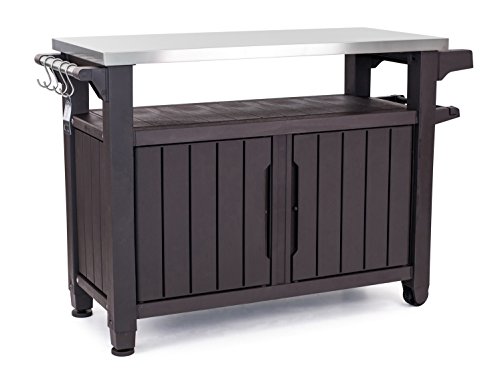
4. Use Patio Storage to Make the Yard Look Ready
Spring hosting gets messy when cushions, garden gloves, citronella holders, ball toys, small tools, and extra throws are scattered across every flat surface. A patio storage bin solves the visual problem and the practical one: you can reset fast before guests arrive and still grab what you need later.
Place the bin near the seating zone, not across the yard. It should hold the items that either clutter the patio or rescue the evening: extra cushions, light blankets, serving cloths, bug-control accessories, wipes, and small games for kids.

5. Keep Food Protected Without Making the Table Awkward
Outdoor food needs a little more structure than indoor food. Covered trays, mesh food tents, lidded pitchers, and weighted napkins keep the table calmer without turning the event into a catering operation. The goal is not perfection. The goal is to avoid the constant small annoyances that pull you away from guests.
Bug-control serving accessories are especially helpful for spring because the yard may still be damp and active. Put covers on food that sits out, keep sweet drinks lidded, and move trash away from the table. If bugs are already heavy near the patio, the food station belongs farther from shrubs and compost areas.
6. Make a Simple Event Layout
Before guests arrive, choose where each function belongs. One zone for sitting. One zone for food. One place for drinks. One visible place for trash. One storage spot for extra gear. That simple map prevents the yard from becoming a pile of good intentions.
| Hosting zone | What belongs there | What to avoid |
|---|---|---|
| Seating area | Outdoor rug, chairs, small side table, light blankets | Extra serving dishes and loose tools |
| Food station | Covered trays, plates, utensils, napkins | Blocking the path to the door |
| Drink spot | Cooler, cups, water pitcher, towel | Putting it in direct foot traffic |
| Storage bin | Cushions, wipes, games, spare tablecloth | Turning it into a mystery junk box |
7. Do the Final 30-Minute Reset
Thirty minutes before people arrive, stop improving and start resetting. Put tools away, wipe the table one more time, turn on the lights, fill the drink station, cover food that is waiting, and walk the guest path. If something is not helping the event, move it out of sight.
The best spring backyard makeover is the one that lets you host without managing the yard all night. Define the space, make food easy, hide the clutter, protect the table, and give people a warm place to settle. That is enough. The yard does not need to look staged. It needs to feel ready.