
As an Amazon Associate I earn from qualifying purchases.
A small patio doesn’t have to feel like a consolation prize. With the right outdoor rug and a smart design strategy, even a 10×10 concrete slab can feel like a true outdoor living room. The secret isn’t buying more stuff — it’s placing the right pieces with intention. This guide walks you through everything: how to choose outdoor rugs for small patios, which materials actually hold up outdoors, how to arrange furniture to create defined zones, and the design tricks that make compact spaces feel twice their size.

Why an Outdoor Rug Is the Most Important Design Decision You’ll Make
In interior design, a rug anchors a room. Outside, it does the same — plus a whole lot more. An outdoor rug defines your “floor,” which instantly signals to anyone stepping onto your patio that this is a purposeful living space, not just leftover concrete. It softens hard surfaces underfoot, reduces heat absorption from dark pavers or stone, muffles sound, and adds color and texture when every other design element is fighting for visual real estate in a tight footprint.
For small patios especially, the rug is the design anchor that makes everything else work. Get the rug right, and your furniture arrangement, plant placement, and lighting all fall into place around it. Get it wrong — wrong size, wrong pattern, wrong material — and the whole space feels cluttered, or worse, forgotten.
How to Choose the Right Rug Size for a Small Patio
Sizing is where most people go wrong. The instinct in a small space is to go small — a 4×6 rug on a 10×12 patio. That’s the wrong move. An undersized rug makes a small space feel even more cramped because it emphasizes how little floor space you have. Instead, follow these rules:
- Leave 12–18 inches of patio border exposed on all sides if possible. This gives you a visual “frame” that actually makes the patio look larger.
- All front legs of furniture should sit on the rug. This connects the seating area and makes it cohesive. If legs float off the rug, the arrangement looks disconnected.
- For a bistro setup (small table + 2 chairs), a 5×7 or 5×8 rug is usually the sweet spot.
- For a loveseat and two chairs, aim for a 6×9 minimum, even on a modest patio.
- Round patios or corner spaces benefit from round or square rugs that mirror the shape of the zone.
Before you buy, tape out the rug dimensions on your patio with painter’s tape. Live with it for a day. You’ll immediately see whether it’s working or not.
Outdoor Rug Materials: What Actually Holds Up Outside
Not all outdoor rugs are created equal. The material determines how long it lasts, how it feels underfoot, how easy it is to clean, and whether it can survive your specific climate. Here’s a straight comparison:
| Material | Durability | Best Climate | Comfort | Maintenance |
|---|---|---|---|---|
| Polypropylene | Excellent | All climates | Moderate | Hose off easily |
| Recycled PET | Very Good | All climates | Moderate–Good | Hose off, eco-friendly |
| Natural Jute/Sisal | Fair | Dry climates only | Good | No moisture — rots easily |
| Bamboo/Woven Grass | Good | Covered patios | Firm | Sweep and spot clean |
| Nylon | Very Good | Most climates | Good | Easy to clean, fades over time |
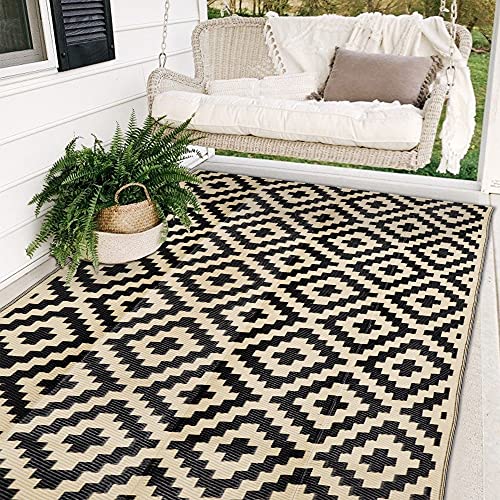
The honest winner for most homeowners: polypropylene or recycled PET. Both are UV-resistant, waterproof, mold-resistant, and built to handle rain, sun, and foot traffic. They’ve also come a long way aesthetically — you’ll find options that look like Moroccan kilims, coastal stripes, and everything in between. Save natural fiber rugs like jute and sisal for covered porches with minimal moisture exposure.
We may earn a commission if you purchase through our link, at no extra cost to you.

Design Strategies That Make Small Patios Feel Larger
1. Use Pattern and Color Strategically
In a small space, your rug pattern does heavy lifting. Horizontal stripes visually widen a narrow patio. Diagonal patterns add energy and draw the eye across the full area, making it feel bigger. Large-scale geometric prints work better than small, busy patterns — tiny prints make a small space feel claustrophobic.
For color: light neutrals (sand, ivory, light gray) expand a space visually. Bold colors and dark tones shrink it. That said, a single bold rug with neutral furniture is a power move — it creates a focal point instead of visual chaos.
2. Zone Your Patio with a Single Rug
On a compact patio, one rug creates one clear zone: a defined seating or dining area. This is intentional design. Everything on the rug belongs together; everything off it is supporting infrastructure — planters, a grill, a side table. That contrast creates order, and order makes small spaces feel bigger and more intentional.
If your patio is wide enough to have two distinct areas (say, a dining corner and a lounging nook), two smaller rugs can define both zones. Keep them in the same color family to avoid visual fragmentation.
3. Choose Furniture That Complements the Rug
Scale matters. Bulky sectional sofas overwhelm a small patio and bury the rug underneath. Instead, go for:
- Slim-profile bistro sets with open metal frames — they let the rug show and don’t block sightlines
- Loveseat + two chairs instead of a full three-seat sofa
- Folding or stackable chairs that disappear when not in use
- Ottomans that double as side tables — multifunctional furniture is your best friend in a small outdoor space
Furniture with legs (vs. solid bases) keeps the rug visible and maintains that light, airy feel. The more rug you can see, the more intentional and spacious the space appears.

We may earn a commission if you purchase through our link, at no extra cost to you.
4. Layer Vertical Interest Above the Rug
Small patios suffer when design stays flat. Draw the eye upward with:
- String lights or Edison bulb strands hung above the seating zone
- Tall potted plants or a slim outdoor planter on the border of the rug
- A wall-mounted planter or outdoor art piece on a fence or exterior wall
- A small pergola or shade sail overhead to frame the zone
The rug establishes your horizontal foundation. Vertical elements give the space dimension and make it feel like a complete room, not just a rug sitting on concrete.
Rug Placement Tips for Specific Patio Types
Apartment Balconies and Narrow Strips
For long, narrow balconies (think 4×12 feet), a runner-style rug (2.5×8 or 3×10) placed lengthwise elongates the space and adds warmth without blocking the walkway. Pair it with two chairs angled slightly inward at one end to create a conversation nook.
Concrete or Paver Patios
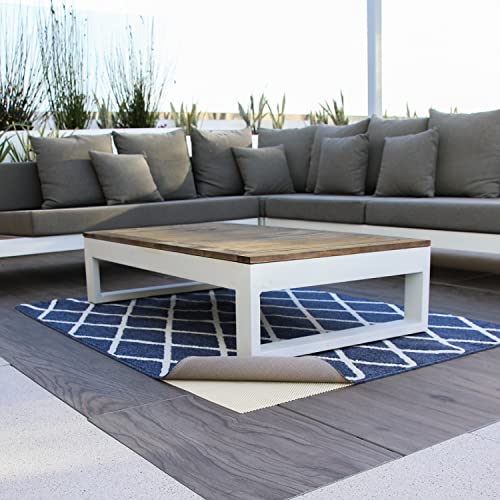
Use a rug pad under your outdoor rug. It prevents slipping on smooth surfaces, extends rug life by reducing abrasion against rough concrete, and adds a small amount of cushion underfoot. Make sure the pad is rated for outdoor use — standard interior rug pads break down with moisture.
We may earn a commission if you purchase through our link, at no extra cost to you.
Wood Decks
Moisture is the enemy here. Choose a flatweave or open-weave rug that allows water to pass through rather than trap underneath. Lift and dry the rug every few weeks to prevent mildew from forming on your deck boards. Polypropylene flatweaves are ideal for this application.
Pro Tips for Maintaining Your Outdoor Rug
- Hose it down monthly and let it dry fully before replacing. Standing moisture is the primary cause of mold and rug deterioration.
- Rotate the rug seasonally to ensure even UV fading and wear patterns.
- Store it during winter in colder climates. Roll it up, wrap in a tarp or storage bag, and keep it in a shed or garage. Even UV-resistant materials degrade faster under freeze-thaw cycles.
- Spot-treat stains immediately with mild dish soap and warm water. Don’t let grease or food stains set — they attract pests.
- Use rug weights or stakes on windy sites to prevent the rug from flipping or curling at the edges.

FAQ: Outdoor Rugs for Small Patios
What size outdoor rug is best for a 10×10 patio?
An 8×8 or 6×9 rug works well on a 10×10 patio. It leaves enough border around the edges to frame the space without making the rug feel shrunken. Avoid anything smaller than 5×7 — it will look like a doormat rather than a design element.
Can outdoor rugs get rained on?
Yes — polypropylene and recycled PET outdoor rugs are designed to handle rain and moisture. They won’t absorb water the way indoor rugs do and will dry quickly. The key is to make sure water can drain away underneath rather than pool. Avoid natural fiber rugs like jute in wet climates — they rot.
Do I need a rug pad under an outdoor rug?
On smooth surfaces like concrete, tile, or composite decking, yes. A rug pad prevents slipping, which is a real safety concern. On rougher surfaces, it’s optional but still extends the life of the rug by preventing abrasion. Use only pads rated for outdoor use.
How do I keep my outdoor rug from blowing away?
The simplest fix is furniture weight — keep chairs and table legs on the rug. For exposed or windy patios, use rug anchor stakes designed for outdoor use, or apply non-slip rug grippers underneath. Double-sided outdoor carpet tape along the border is also an effective and inexpensive solution.
Should I leave my outdoor rug out all year?
In mild climates (USDA zones 8 and above), most quality outdoor rugs can stay out year-round with minimal maintenance. In colder climates with freezing temperatures and heavy snow, roll and store your rug indoors or in a covered shed from late fall through early spring. It’ll look better longer.
Final Thoughts
A well-chosen outdoor rug transforms a bare patch of concrete into a space you actually want to spend time in. The principles here aren’t complicated: size up rather than down, choose polypropylene or recycled PET for durability, keep furniture legs on the rug, and layer vertical elements to give your small patio dimension. Whether you’re working with a balcony, a side yard, or a modest backyard slab, the strategy is the same — design with intention, and the space will deliver well beyond its square footage. Your small patio has a lot more potential than you think. A rug is a great place to start unlocking it.