
As an Amazon Associate I earn from qualifying purchases.
Our backyards are more than plots of land. They’re places to unwind, and often quiet witnesses to the moments we remember most. A nostalgia garden takes that one step further: it’s a space you design on purpose to bring back simpler times, favorite places or a childhood yard, through the plants, scents, textures and features you choose.
It’s a personal and rewarding way to approach landscape design. Forget generic curb appeal; think of it as a living scrapbook. This guide walks you through the practical steps, from mapping your memories to picking plants and building a few simple DIY projects, so your backyard feels like it has always been yours.
Start with your memories
Before you pick up a trowel, take time to look back. What memories do you want your garden to bring back? Close your eyes and think about:
- Your childhood home: What grew in your grandmother’s yard? What drifted in through the kitchen window?
- Favorite trips: Were there flowers, trees or a landscaping style you loved at a memorable vacation spot?
- Special people: Did a favorite aunt have a rose bush? Did a grandparent tend a particular vegetable patch?
- A specific era: Do you link certain plants or garden looks with the 1950s, the 70s or another time?
Jot down keywords, pictures and especially scents. These notes become the blueprint for your design and guide every plant and feature you choose. Pick three or four strong memories rather than trying to fit in everything; a focused garden feels more like a real place.
What you’ll need
You don’t need much to get started, and a lot of it may already be in your shed or attic.
Along the way we suggest a few products that make these jobs easier, from a climbing rose to a rain barrel.
All six are compared in a table near the end. The star ratings on them are our own editorial scores for how well each one suits a nostalgia garden.
Nostalgia garden plants that carry memories
A nostalgia garden isn’t just a collection of old-fashioned plants; it’s a whole experience. Plants are the living heart of it, so focus on ones that are tied to your own memories or were common in the era or region you’re recalling. Our list of old-fashioned flowers for modern yards is a good place to browse.
Classic flowers and ornamentals
- Roses, especially heirloom-style climbers: Few flowers say romance like roses. ‘Peace’ was introduced as World War II ended and filled post-war gardens, ‘New Dawn’ is a fragrant climber that scrambles happily over an arbor, and ‘Eden‘ is a newer climber bred for that full, old cottage look.
- Hydrangeas: The big, blousy blooms of mophead hydrangeas (Hydrangea macrophylla) say “grandma’s garden.” Flower color can shift between pink and blue with your soil.
- Peonies: Lavish, fragrant blooms that mark late spring and can live for decades in one spot.
- Lavender (Lavandula): A cottage staple whose calming scent and purple color bring back sunny summer afternoons. It needs sun and sharp drainage.
- Hollyhocks (Alcea rosea): Tall, old-fashioned biennials for the back of a border, against a fence or a shed wall.
- Garden phlox (Phlox paniculata): Sweet-scented summer clusters that filled borders of years past.
- Impatiens (Impatiens walleriana): If your memories include bright, shade-loving annuals in pots and hanging baskets, these belong in the mix.

Eden Climbing Rose (Heirloom Roses)
An own-root climbing rose with the full, old cottage look
Grown on its own roots and shipped in a 1-gallon pot, it reblooms in flushes through the season, is lightly fragrant and matures to about 10 by 6 feet. Hardy in zones 5 to 10.
New to roses? Our guide to foolproof roses for beginners lists varieties that stay healthy with little spraying, so the nostalgic look doesn’t come with a lot of work.
Fragrant plants: scents that take you back
Scent is one of the most powerful memory triggers there is, so give it a big role. Plant fragrant things where you’ll brush past them or sit near them in the evening.
- Lilacs (Syringa vulgaris): The scent of lilacs in spring is a powerful memory for countless people. Our lilac care guide covers pruning so they bloom every year.
- Jasmine (Jasminum officinale): A sweet, delicate fragrance for a pergola or trellis near a seat. It is only reliably hardy in mild-winter areas; in colder zones, grow it in a pot and bring it in.
- Scented geraniums (Pelargonium): Varieties smell of lemon, rose, peppermint or nutmeg, and they’re perfect in pots where you can rub a leaf.
- Mint (Mentha): Crushed mint can bring back summer drinks or an old herb patch. It spreads hard, so keep it in a container.
- Honeysuckle: Many of us remember sipping honeysuckle on summer evenings, but pick your species carefully (see the warning below).
The Missouri Department of Conservation adds that native honeysuckles are well-behaved on trellises, so you can keep the look of an old vine-covered fence without the spread.
Edible and herb favorites
- Heirloom tomatoes: The smell of sun-warmed tomato leaves and the taste of a homegrown ‘Brandywine’ or ‘Cherokee Purple’ take many people straight back to a summer garden. Our tomato planting depth guide helps them root deep.
- Strawberries (Fragaria x ananassa): Easy to grow, with sweet fruit and little white flowers that feel like carefree summer days.
- Rhubarb (Rheum rhabarbarum): Broad leaves and red stalks that bring back pies and crumbles from a grandparent’s kitchen. Only the stalks are eaten; the leaves are poisonous.
- Herbs: Rosemary, thyme, oregano and chives weren’t just for cooking; their scents are woven into many garden memories.
Paths, structures and sounds
The non-living parts give your plants structure and context. Choose materials that feel authentic and lived-in, and features that give you a reason to stop and linger.
Hardscaping and pathways
- Brick paths: Worn, reclaimed bricks in a herringbone or basketweave pattern add character and a sense of history right away.
- Flagstone patios: Irregular flagstones with moss or creeping thyme between them feel natural and timeless.
- Gravel paths: The crunch of gravel underfoot recalls old country gardens. Pea gravel or decomposed granite both work.
- Wood fencing: A classic picket fence, painted white or left to weather, is iconic for many nostalgic garden styles.

Garden features and structures
- Arbors and pergolas: Covered in climbing roses or a native vine, they make shady retreats and romantic entries. A simple wooden arbor feels classic.
- Benches and swings: A weathered bench under a tree or a porch swing invites you to sit and reflect, just like the good old days.
- Birdbaths and fountains: The trickle of a stone birdbath or a simple tiered fountain adds a peaceful, timeless feel.
- Vintage planters: Old galvanized tubs, terracotta pots with a patina, or an old wheelbarrow make charming containers.
- Potting benches: A rustic bench with old tools hanging nearby says “well-loved garden.”
- Statuary and ornaments: Classic bird statues, concrete gnomes (if that’s your thing) or a sundial fit better than modern abstract art; our guide to blending garden decor shows how to place them.
The sounds of memory
Beyond trickling water, think about the other sounds that bring back memories:
- Wind chimes: A well-tuned chime is pure lazy summer afternoon. A deep-toned set such as the ASTARIN 36-inch Deep Tone Wind Chimes sounds mellow rather than tinny.
- Rustling leaves: Trees like quaking aspen are named for the way their leaves flutter and whisper in a breeze.
- Birdsong: Feeders, water and native shrubs bring birds in; our backyard bird guide covers what different species need.
DIY projects for your nostalgia garden
DIY projects are a great way to give your space character and history. None of these need advanced skills, and each one makes a big difference.
1. Give vintage finds a new job
Flea markets, antique shops and your own attic can turn up pieces with built-in history. The trick is seeing what they could be beyond their original use.
- Old wagons or wheelbarrows as planters: A red wagon or a weathered wooden wheelbarrow makes a charming, movable planter for annuals or herbs. Drill drainage holes and fill with good potting mix.
- Galvanized tubs as raised beds or mini ponds: A tub like the Behrens 15 Gallon Galvanized Tub makes a small raised bed for herbs (drill holes first) or, left watertight, a little water garden.
- Milk cans and watering cans as decor: Set old milk cans by an entry or use one as a pedestal for a pot. A rusty watering can looks right at home on a potting bench.
- Antique tools as wall art: Hang old rakes, shovels or hoes on a shed wall or fence. Seal them to stop more rust, or embrace the patina.
- Old windows as cold frames: Rest an old window sash on a simple wooden box to extend your growing season, propped open on warm days.

2. Build a rustic arbor or trellis
An arbor or trellis adds height, frames an entry and supports climbing plants. Keep the design simple so it feels handmade.
- Simple wooden arbor: Build one from 4×4 posts for the uprights and 2x4s for the crossbeams and side lattice, using rustic or reclaimed lumber and heavy-duty screws and brackets. A ready-made kit such as the VINGLI 85-Inch Wooden Arbor is the quicker route. Then plant a climbing rose at its base.
- Branch trellis: Lash sturdy branches (birch, willow or dogwood) together with twine or thin wire for a free-form trellis. It’s perfect for sweet peas, morning glories or pole beans.
- Rebar trellis: Bend rebar into a simple grid or arch for a sturdy, rustic support that disappears once plants cover it.
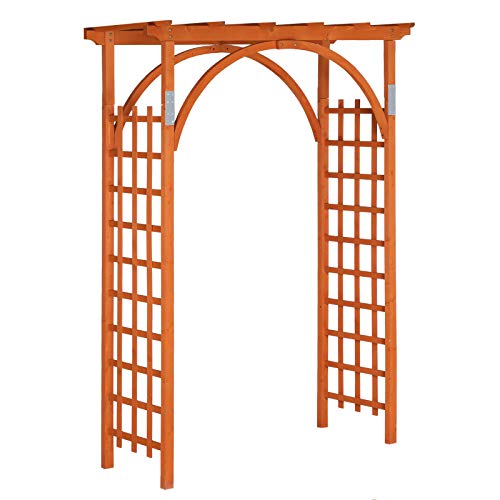
VINGLI 85-Inch Wooden Arbor
A classic arched wooden arbor with lattice sides for climbers
A bow-shaped header and two lattice side panels give a climbing rose or vine room to grow, and the solid wood arbor assembles from numbered parts without extra tools.
Need something to cover it fast? Our list of fast-growing flowering vines has options for sun and shade.
3. Make memory stepping stones and paths
The paths you walk on can carry memories too. Stepping stones pressed with handprints, leaves or broken china turn an ordinary path into a family record.
Handprint stones make a lovely project with grandkids, but go carefully with the mix.
For a gravel path, mark it out, dig down a few inches, lay landscape fabric, then fill with pea gravel, decomposed granite or crushed stone. Edge it with reclaimed bricks or natural stones. A kit like the StoneCraft Mosaic Stepping Stone Kit makes a first stone easy for kids or grandkids.

StoneCraft Mosaic Stepping Stone Kit
Everything for one 8-inch mosaic stepping stone, just add water
Comes with an 8-inch square mold, 3.5 pounds of stepping stone mix, colored rocks, glass gems, a mixing paddle and a writing tool for names and dates.
4. Add a potting bench and rain barrel
- Pallet potting bench: Take apart pallets and rebuild them as a work counter with a back panel for shelves and hooks for old tools. Use pallets stamped HT (heat-treated), not MB (methyl bromide).
- Classic rain barrel: Catch rainwater from a downspout in a barrel that suits your garden’s look. The RTS Home Accents 50-Gallon Rain Barrel has a wood-look walnut finish, a flat back that sits against the wall and a brass spigot.
The EPA encourages rain barrels as a simple way to save water and cut runoff; keep the lid tight or screened so mosquitoes can’t breed. Our guide to DIY and pre-built potting areas has more bench plans.
Common nostalgia garden mistakes
A few old-time habits are worth leaving in the past:
- Planting invasive old favorites. Japanese honeysuckle, and in many areas English ivy and Japanese barberry, escape into woods. Check your state’s invasive list first.
- Trusting old paint. Windows and furniture painted before 1978 may have lead paint. Don’t sand them, and keep them out of vegetable beds.
- Planting mint in the ground. It will take over. Keep it in a pot.
- Copying a whole garden at once. Start with one corner or one bed, and let it grow.
Caring for your garden as it grows
A nostalgia garden, like memory itself, isn’t static. It changes, and that ongoing link between past and present is the beauty of it.
- Embrace imperfection: Skip the pristine, clipped look. A little wildness, moss on a stone or a weathered bench only adds to the charm.
- Let some plants self-seed: Cosmos, poppies and hollyhocks will happily sow themselves, giving you new blooms that feel natural.
- Add seasonal touches: Pumpkins and gourds in fall or pots of pansies in early spring can recall different holiday traditions.
- Share it: A nostalgia garden is meant to be enjoyed. Cut flowers for friends (our cutting garden guide has easy picks) and make new memories in it.
Our nostalgia garden picks compared
Here are the six products from this guide side by side, from the climbing rose to the rain barrel.
| Product | Best for | Our rating | |
|---|---|---|---|
| Eden Climbing Rose (Heirloom Roses) | Climbing roseOwn-root, repeat-blooming climber, lightly fragrant, zones 5-10 | ★★★★½ 4.5/5 | Check price |
| VINGLI 85-Inch Wooden Arbor | Garden entryArched header and lattice sides, assembles without extra tools | ★★★★☆ 4/5 | Check price |
| StoneCraft Mosaic Stepping Stone Kit | Memory stepping stones8-inch mold, mix, gems and a writing tool in one box | ★★★★☆ 4/5 | Check price |
 Behrens 15 Gallon Galvanized Tub | Vintage planterHot-dipped galvanized steel, 21 x 21 x 11 inches, classic zinc look | ★★★★½ 4.5/5 | Check price |
 ASTARIN 36-inch Deep Tone Wind Chimes | Garden soundSix hand-tuned aluminum tubes for a low, mellow tone | ★★★★☆ 4/5 | Check price |
 RTS Home Accents 50-Gallon Rain Barrel | Rain barrelWalnut wood look, flat back and brass spigot, overflow valve | ★★★★☆ 4/5 | Check price |
Frequently asked questions
What is a nostalgia garden?
A nostalgia garden is a garden designed around your own memories. Instead of following a trend, you choose plants, scents, materials and features that remind you of a childhood yard, a favorite place or a special person, such as your grandmother’s lilacs or a grandfather’s tomato patch. Every nostalgia garden looks different, because every gardener’s memories are different.
Which plants are best for a nostalgia garden?
Old-fashioned, fragrant plants work best: climbing roses, lilacs, peonies, hydrangeas, lavender, hollyhocks, garden phlox and herbs like rosemary and thyme. Add heirloom edibles such as ‘Brandywine’ tomatoes, strawberries or rhubarb if a vegetable patch is part of your memories. Above all, choose plants tied to your own past, and avoid invasive ones like Japanese honeysuckle.
Can I make a nostalgia garden in a small yard or on a patio?
Yes. Pick one or two strong memories and build around them. A galvanized tub of herbs, a potted climbing rose on a small trellis, a scented geranium by the door and a wind chime can make even a balcony feel like a grandparent’s porch. Containers also let you grow tender plants like jasmine in cold climates.
When is the best time to start a nostalgia garden?
Plan in winter, when you have time to sketch and gather ideas. Plant shrubs, roses and perennials in spring or early fall, when cooler weather helps roots settle. Hardscaping and DIY projects like stepping stones or an arbor can go in any time the ground isn’t frozen or soaked.
Let your memories lead
By blending sound design with your own history, you’re not just planting a garden; you’re growing a living story. Start small, let it change with the seasons, and watch your backyard turn into a deeply personal retreat: your own nostalgia garden.